Some places are remembered for their history.
Some are remembered for their beauty.
And then there are places like Nakoda Jain Temple — places people remember because of what they felt there.
Hidden in the desert region of Rajasthan, Nakoda Ji is not just another ancient temple. For thousands of devotees, it is a place of faith, mystery, miracles, and deep spiritual energy.
People travel here with prayers they have carried for years.
Businessmen visit before starting new ventures.
Families come after hearing stories of wishes fulfilled.
Some devotees believe Nakoda Bhairav protected them during difficult moments in life. Others speak about an unexplainable peace they experienced after visiting the temple.
And then there are the traditions of Nakoda Ji — traditions followed with such devotion that even today many pilgrims refuse to take temple prasad outside the premises because they believe the blessings belong only within the sacred boundaries of the temple.
Over the years, Nakoda Ji has become far more than a pilgrimage destination.
It has become an emotion.
But what makes this temple so special?
Who built it in the middle of Rajasthan’s harsh desert landscape?
Why is Nakoda Bhairav worshipped so differently here?
And why do devotees consider the rituals of Pakshal and Vaskep spiritually powerful even today?
To understand Nakoda Ji, one has to move beyond ordinary history and enter a world shaped by devotion, faith, mystery, and centuries of spiritual belief.
How Nakoda Ji Temple Was Built
According to ancient Jain traditions, this sacred region was originally known as Virampur.
Historical accounts mention that two brothers named Virsen and Nakorsen established settlements here centuries ago during the early Vikram era. Deeply devoted to Jainism, the brothers are believed to have built magnificent Jain temples in this desert region of Rajasthan.
Over time, the temple became especially famous because of the sacred idol of Parshvanatha, who later became the principal deity of the temple.
Gradually, the region itself came to be known as Nakoda.
According to Jain traditions, the idols were consecrated by the respected Jain Acharya Sthulabhadra, whose name holds great importance in Jain history.
But the journey of Nakoda Ji was not easy.
Over centuries, invasions and attacks damaged the temple multiple times. During dangerous periods, devotees secretly hid sacred idols underground to protect them from destruction.
Many believe these idols were later rediscovered through divine signs and dreams seen by devotees.
The temple was eventually rebuilt with immense devotion, and the idol of Parshvanath Bhagwan was reinstalled as the Mulnayak (main deity) of the shrine.
Perhaps that is why devotees feel Nakoda Ji was not built only with stone and marble.
It was rebuilt again and again through faith.
The Miraculous Idol of Parshvanath Bhagwan
At the center of Nakoda Ji sits the sacred black-colored idol of Parshvanatha in Padmasana posture beneath a serpent canopy.
For Jain devotees, Parshvanath Bhagwan represents compassion, truth, non-violence, sacrifice, and spiritual awakening.
Long before Mahavira, Parshvanath renounced worldly comforts in search of liberation and inner truth.
Even today, many pilgrims believe the idol carries a unique spiritual calmness.
Some visitors quietly sit in front of the deity for several minutes without speaking. Others describe feeling emotionally lighter after darshan.
Whether one sees it spiritually or emotionally, there is a silence around the idol that feels difficult to explain.
For devotees, it is not just an ancient murti.
It is a living symbol of peace and faith.
Why Nakoda Bhairav Is Different From Other Bhairav Temples?
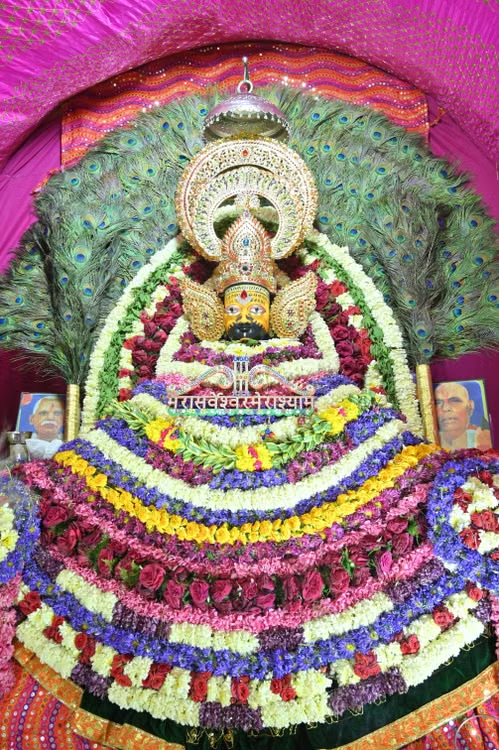
One of the most unique aspects of Nakoda Ji is Nakoda Bhairav — the guardian deity of the temple.
Across India, Bhairav temples are often associated with fierce rituals and Tantric traditions.
But Nakoda Bhairav is worshipped differently.
Here, Bhairav Ji is deeply connected to Jain devotion and is believed to serve as the spiritual protector of the temple and its devotees.
This rare connection between Jain worship and Bhairav devotion makes Nakoda Ji unlike almost any other Bhairav temple in India.
Devotees believe Nakoda Bhairav:
- protects pilgrims
- fulfills sincere wishes
- removes obstacles
- protects businesses and families
- and responds quickly to genuine prayers
Many businessmen especially visit Nakoda Ji before beginning important work or financial ventures because they believe Bhairav Ji brings stability and protection.
For believers, Nakoda Bhairav is not worshipped out of fear.
He is worshipped with trust.
Miracles of Nakoda Bhairav Ji
For many devotees, the true mystery of Nakoda Jain Temple lies in the countless miracle stories associated with Nakoda Bhairav Ji.
Across Rajasthan and Gujarat, devotees often describe him as a deity who responds quickly to sincere prayers.
Even today, pilgrims visiting Nakoda Ji share stories they believe cannot be explained logically.
Some claim:
- failing businesses recovered unexpectedly
- financial crises suddenly improved
- dangerous situations were avoided
- family disputes settled peacefully
- emotional stress disappeared
- or recurring negative experiences stopped after visiting the temple
Many devotees also speak about unusual dreams after praying to Bhairav Ji — dreams where they felt guided, protected, or reassured during difficult phases of life.
Local traditions strongly believe Nakoda Bhairav continues to spiritually protect the temple and the devotees who visit with faith.
Whether one believes these stories literally or spiritually, there is no denying how deeply these experiences shape the faith of people connected to Nakoda Ji.
For many devotees, Bhairav Ji is not simply worshipped.
He is experienced.
The Sacred Rituals of Pakshal and Vaskep
Among the most spiritual experiences at Nakoda Jain Temple are the sacred rituals of Pakshal and Vaskep.
For devotees, these rituals are not simply traditions.
They are moments of purification, devotion, and inner peace.
Pakshal refers to the ceremonial cleansing of the idols of the Tirthankaras. In Jain tradition, it symbolizes the cleansing of one’s inner impurities — anger, ego, greed, attachment, and negativity.
The ritual usually takes place early in the morning.
During Pakshal:
- the idols are bathed with pure water
- sacred mantras are chanted continuously
- the atmosphere remains peaceful and devotional
- and devotees participate with deep reverence
The sound of temple bells, the fragrance of sandalwood, and the silence inside the marble halls create an atmosphere that feels deeply calming.
Many devotees believe the water used during Pakshal carries spiritual blessings.
After the ritual, pilgrims often apply small amounts of the sacred water:
- on the forehead
- over the eyes
- on the head
- and sometimes on areas affected by illness or pain
Some believe this sacred water brings emotional peace, spiritual positivity, and healing energy.
Following Pakshal, the sacred ritual of Vaskep is performed.
Vaskep is a fragrant sacred powder traditionally prepared using ingredients such as:
- sandalwood
- saffron
- camphor
- and other aromatic substances used in Jain rituals
In Jainism, Vaskep is applied:
- on idols during pujas
- on sacred scriptures during Gyan Puja
- and sometimes on devotees as a blessing
The fragrance spreading through the temple during Vaskep creates an atmosphere many devotees describe as peaceful and spiritually uplifting.
In Jain tradition, Vaskep symbolizes purity, auspiciousness, devotion, and respect for divine knowledge.
For devotees visiting Nakoda Ji, Pakshal and Vaskep are not just rituals to witness.
They are experiences to feel.
The Sacred Rule Every Devotee Respects
One of the most unique traditions associated with Nakoda Ji involves the temple prasad.
Devotees strongly believe that prasad offered inside the temple should never be taken outside the temple premises.
According to local belief, the sanctity and blessings of the offering belong within the sacred space of the temple itself.
Even today, pilgrims follow this tradition with deep seriousness and devotion.
It is customs like these that add to the mystery and spiritual aura of Nakoda Ji.
Major Attractions Inside Nakoda Ji Temple
The Miraculous Idol of Nakoda Parshvanath
The spiritual heart of the temple is the sacred idol of Nakoda Parshvanath.
Seated peacefully beneath a serpent canopy, the black-colored idol attracts thousands of devotees every year.
Many pilgrims believe the atmosphere around the idol feels unusually calm and spiritually powerful.
For many visitors, this darshan becomes the most emotional moment of their journey.
The Shrine of Nakoda Bhairav
The shrine of Nakoda Bhairav is one of the most visited parts of the temple complex.
Devotees gather here seeking blessings for protection, success, peace, and fulfillment of wishes.
During aarti, the atmosphere around the shrine becomes deeply emotional with chants, bells, incense, and prayers filling the temple halls.
The Marble Architecture
The temple itself is beautifully constructed with traditional Rajasthani craftsmanship.
Inside the complex, visitors can witness:
- intricately carved marble pillars
- beautifully designed domes
- detailed ceilings
- ornate corridors
- and ancient artistic carvings
During sunrise and sunset, the marble temple glows beautifully against the desert landscape of Rajasthan.
The Evening Aarti Atmosphere
As evening approaches, the atmosphere of Nakoda Ji changes completely.
Temple bells echo softly through the halls while devotees gather for bhajans and aarti.
The combination of:
- glowing lamps
- devotional music
- incense fragrance
- and the silence of the surrounding desert
creates an atmosphere many pilgrims never forget.
A Temple Where Faith Still Feels Alive
Empires disappeared long ago.
Ancient kingdoms turned into ruins.
Trade routes faded into Rajasthan’s desert sands.
Yet Nakoda Jain Temple continues to stand with the same faith that has drawn devotees here for centuries.
Even today, people arrive carrying hopes, prayers, fears, and gratitude.
Some come searching for blessings.
Some come searching for peace.
And some simply come because they believe Nakoda Bhairav called them here.
Hidden in Rajasthan’s desert landscape, surrounded by centuries of mystery and devotion, Nakoda Ji remains one of India’s most spiritually powerful temples — a place where faith still feels alive.
Leave a Reply